
Heritage
One of humanity's oldest crafts.
The methods we bring to a refinery or a hospital rooftop are the direct descendants of a tradition thousands of years old. A short history of falconry, and how it came to solve modern problems.
Falconry, the training of birds of prey and flying them at wild quarry, is old almost beyond reckoning. UNESCO recognizes it as part of the Intangible Cultural Heritage of Humanity, one of the few living traditions that reaches back across so much of the human story.
Origins
Older than the first cities.
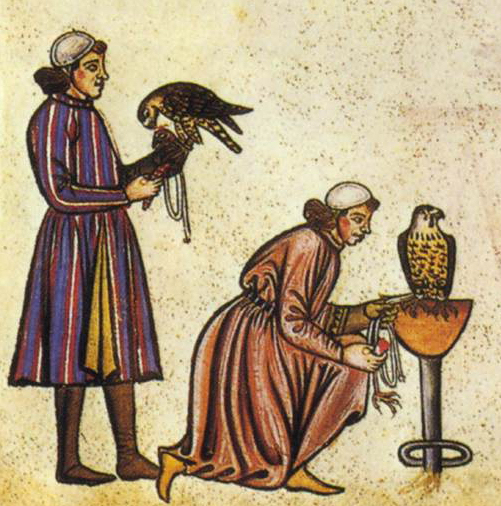
The earliest surviving references to falconry come from China and Mesopotamia some four thousand years ago, and many scholars believe the practice is far older still, with roots that may run back more than thirteen thousand years, long before the rise of the first civilizations. Almost everywhere birds of prey and open country met, people learned to hunt with hawks.
A part of daily life
Sophisticated craft, everyday tool.
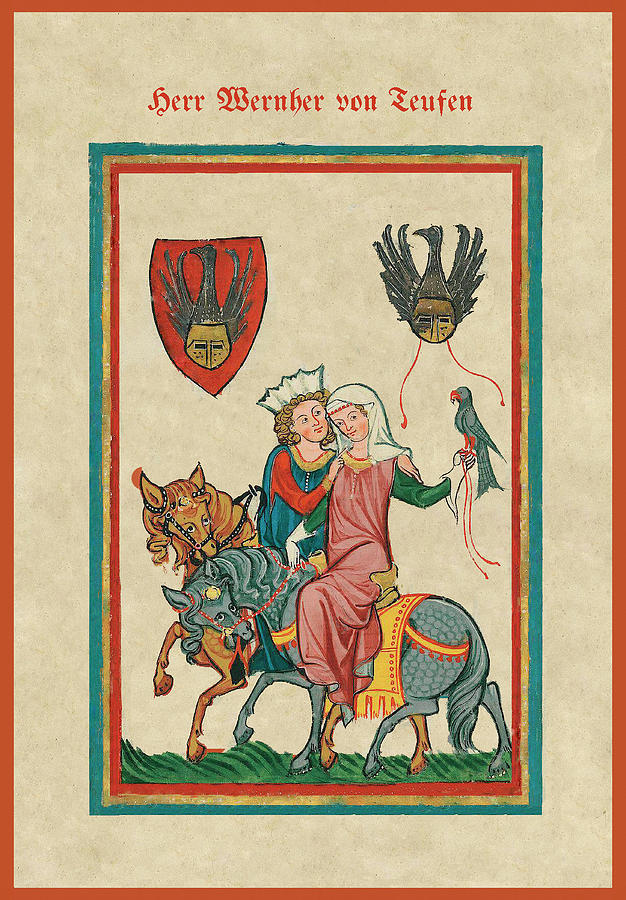
Over the millennia the craft grew refined, with specialized equipment and careful technique, and wove itself into ordinary life. In medieval Britain, falconry was close to universal: both a pastime and a practical way to put meat on the table. Commoners barred from hunting deer or boar in the forests of the nobility could still fly a hawk for rabbits and small birds, adding wild game to an otherwise thin diet.
The words it left behind
The language we still speak has roots in falconry.
The sport ran so deep that falconers trace a handful of everyday expressions back to the mews. To be "fed up" is a hawk that has eaten its fill and won't fly; to be "hoodwinked" is to be blinded by the falcon's hood; to have someone "under your thumb" or "wrapped around your finger" is the leash held fast in the hand.
There's a longer tale, too: the boy who carried a nobleman's perch, his cadge, was the cadger, and when gentlemen traded hawks for golf clubs, the story goes, the cadger became the caddie.
How many of these truly began in falconry is debated. The dictionaries give "caddie" a French root, cadet. Even so, the connections are old, and falconers tell them anyway.
A livelihood
Work, not only sport.
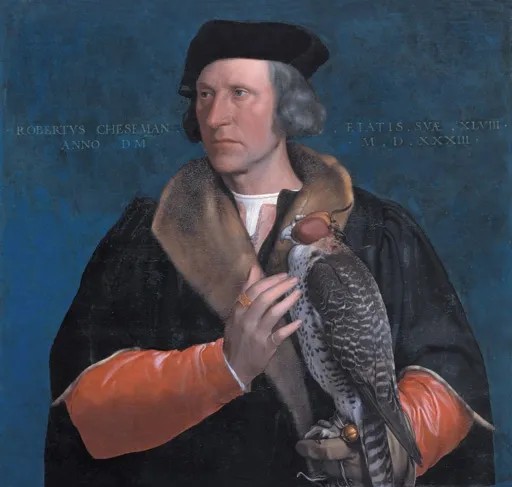
Falconry has long been a way to earn a living, not only a sport for the nobility. Accounts from medieval Eastern Europe describe lords who welcomed settlers onto their land on the understanding that rent would be paid in game: hundreds of quail and other birds, taken by hawk and delivered each season.
Falconry today
An ancient craft, put to modern work.
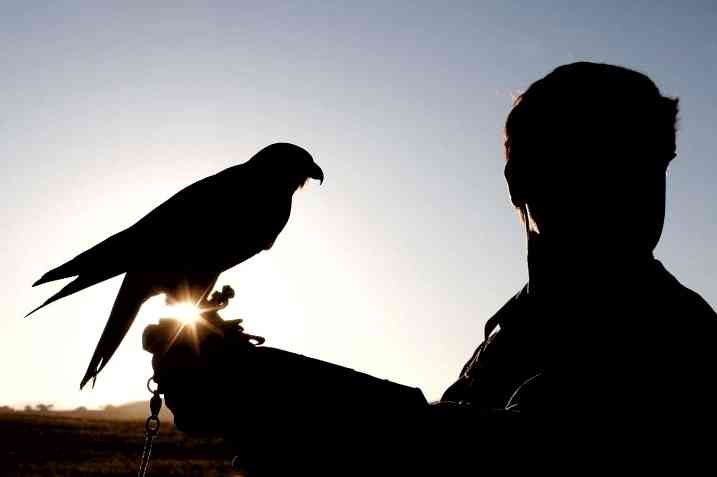
Commercial falconry, flying birds to solve a problem rather than to hunt or for sport, is a recent chapter. The first serious attempts came in the 1970s and 80s, and the field only took hold around the turn of the millennium. Agriculture led the way: falcon flights proved a reliable way to keep pest birds off high-value crops like wine grapes and blueberries.
From there it spread. Resorts, commercial and industrial sites, transit systems, schools and hospitals, solar generation, refineries, and waste facilities all found the same thing worked. The oldest of field crafts is now married to modern technology, putting trained birds of prey to work in ways our ancestors could never have imagined, and doing it, at its best, with the discipline the tradition has always demanded.
That tradition, working for your site.
See how we apply it: falconry abatement for open sites, or the full range of our services. We respond to every inquiry within one business day.